
Summary
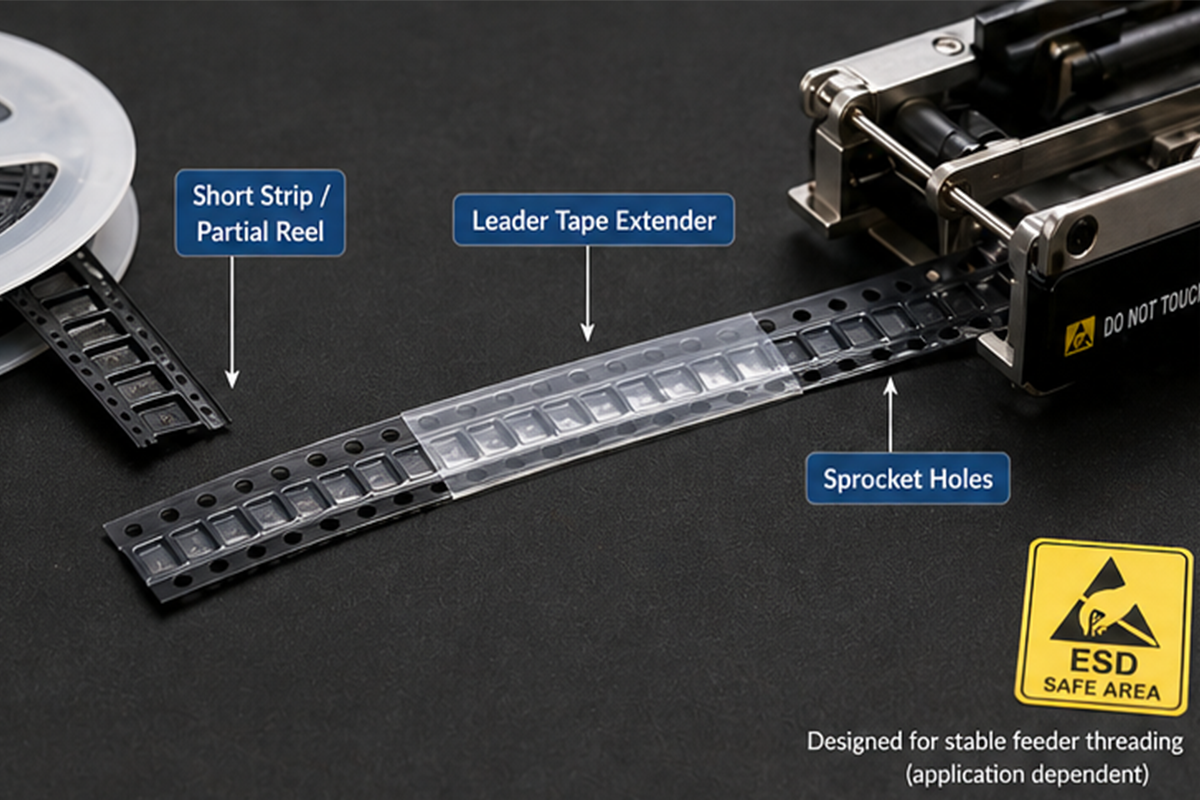
In SMT (Surface Mount Technology) production, partial reels and short carrier tape strips can create avoidable downtime and scrap. Most feeders require a stable “leader” length to thread through drive gears and reach the pick position. Without a proper leader, operators often sacrifice components, rely on manual placement, or use improvised materials that increase jam risk.
Leader Tape Extenders solve this by adding a standardized, feederfriendly leader section—helping you start picking closer to the first usable component while maintaining reliable indexing and alignment.
Why Partial Reels and Short Strips Cause Problems
Short material is common in:
R&D builds and prototype runs
Engineering changeovers and leftover reels
Small-batch production where full reels are not economical
But many feeders need a minimum leader length to:
Engage drive gears and tensioners consistently
Maintain stable indexing rhythm
Present the first component correctly at the pick window
When the leader is missing or too short, teams often see:
Startup waste: initial components sacrificed during manual threading
Feeder instability: misfeeds, indexing errors, jams
Operator variance: different results across shifts and technicians
What Is an SMT Leader Tape Extender?
An SMT leader tape extender is a purpose-built strip designed to match key mechanical properties of carrier tape, including:
Width and thickness compatible with feeder gates
Sprocket hole pitch and positioning for accurate indexing
Adhesive system intended to bond reliably without damaging feeders or leaving residue (application dependent)
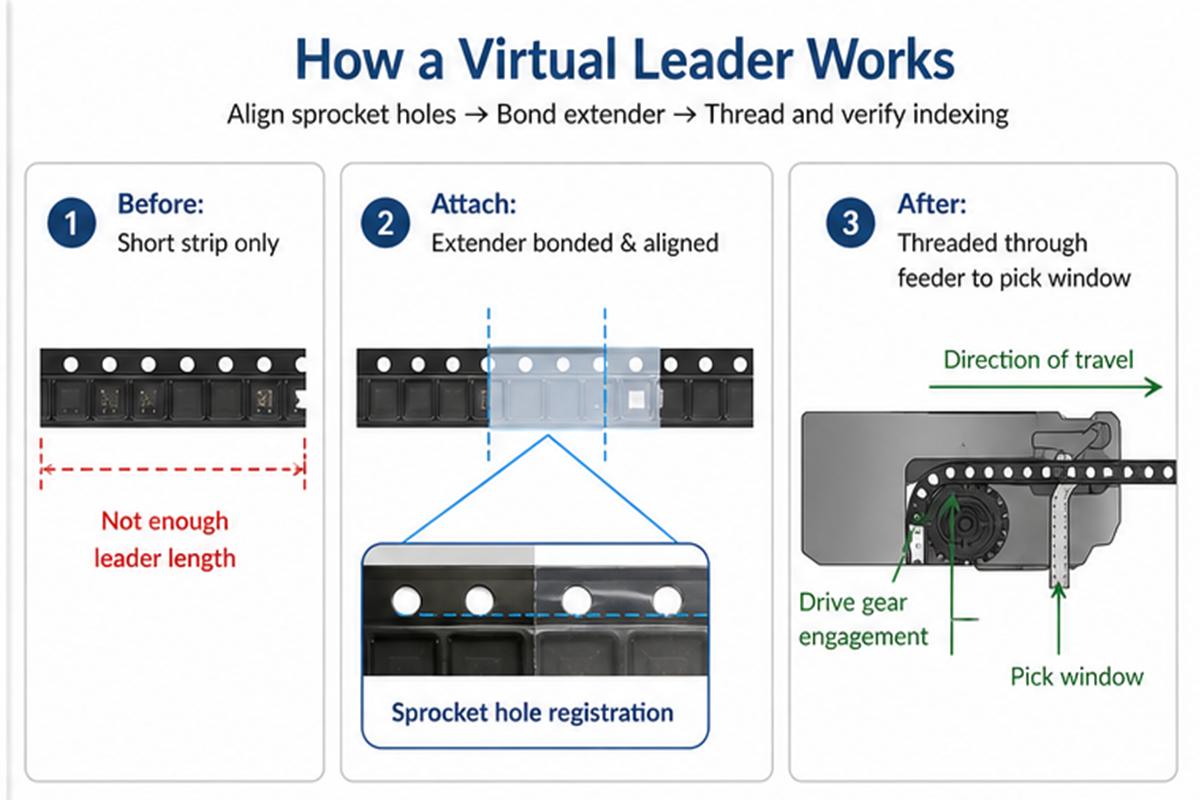
When attached to a short reel, it forms a virtual leader (often around 500 mm, product dependent) that allows normal feeder threading and consistent advance.
4 Key Benefits for SMT Operations
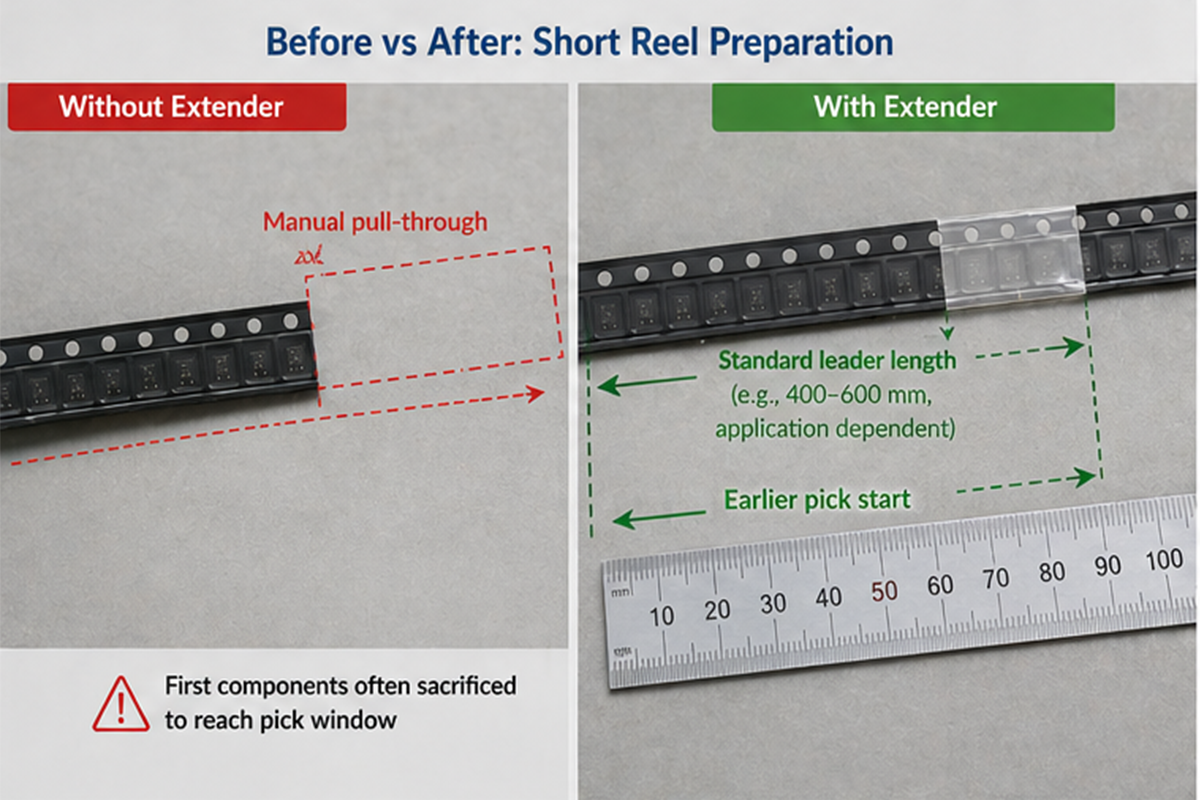
1) Reduce Startup Waste (Recover More Usable Components)
Typical problem: Loading short strips often means pulling carrier tape through the feeder until the pick window is reached, sacrificing early components.
How the extender helps: The feeder consumes the extender during indexing, so the machine can begin picking closer to the first usable component—especially valuable for expensive ICs, sensors, and prototype allocations.
2) Enable Repeatable Feeder Threading
Typical problem: Very short strips cannot be tensioned properly through gears and guides, forcing manual handling.
How the extender helps: A standardized leader improves “thread-and-tension” consistency, reducing operator-to-operator variance.
3) Protect Feeder Health (Avoid Jams and Residue)
Typical problem: DIY methods (office tape, uneven joints) can be too thick, leave residue, or shift under tension, increasing jam risk.
How the extender helps: A controlled, purpose-designed material profile helps reduce friction and mechanical interference through feeder gates (setup dependent).
4) Improve Optical and Mechanical Recognition
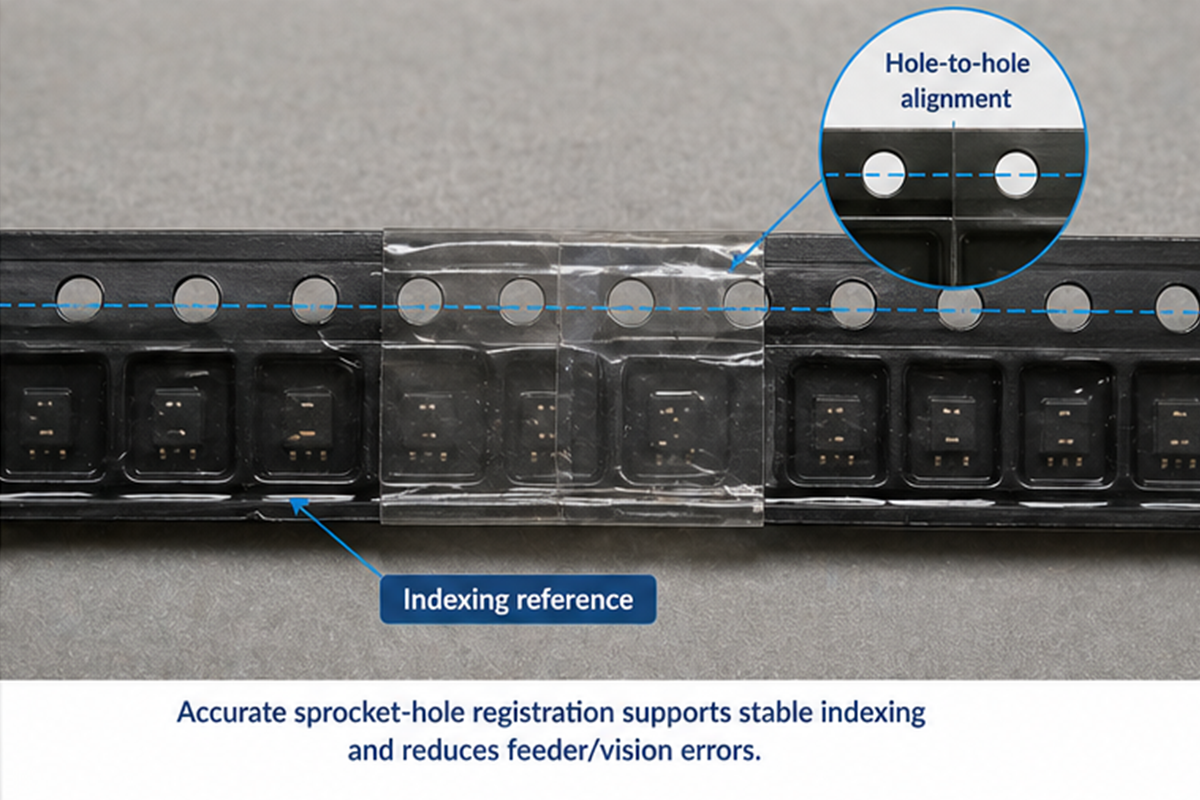
Typical problem: Misaligned sprocket holes can trigger vision alarms or mis-picks, particularly near transitions.
How the extender helps: Accurate sprocket hole registration supports consistent indexing and reduces recognition errors.
Step-by-Step: How to Prepare Short Reels
Use this method to standardize results across shifts:
Confirm compatibilityMatch the extender to carrier tape width/pitch and feeder type.
Align sprocket holesLine up sprocket holes precisely to maintain consistent indexing.
Bond the extenderApply pressure evenly along the joint to prevent lifting or skew.
Cover tape transition (if applicable)Ensure the cover tape transition peels smoothly without catching.
Thread and verifyThread through the feeder path and confirm stable advance before running at speed.
Practical Tips (Engineering-Friendly)
Use consistent pressure and a flat surface during bonding
Keep the joint area clean to improve bonding reliability
Avoid thick, non-industrial tapes in feeders—thickness and residue can cause long-term maintenance issues
Document a simple pass/fail check: alignment, flatness, and smooth peel
Conclusion: Small Tool, Measurable Improvement
Leader tape extenders are more than convenience items. For prototype builds and small-batch production, they support: